Birth Anniversary:
Magha Krishna Paksha, Panchami, Vikram Samvat 1887
(3 January 1831)
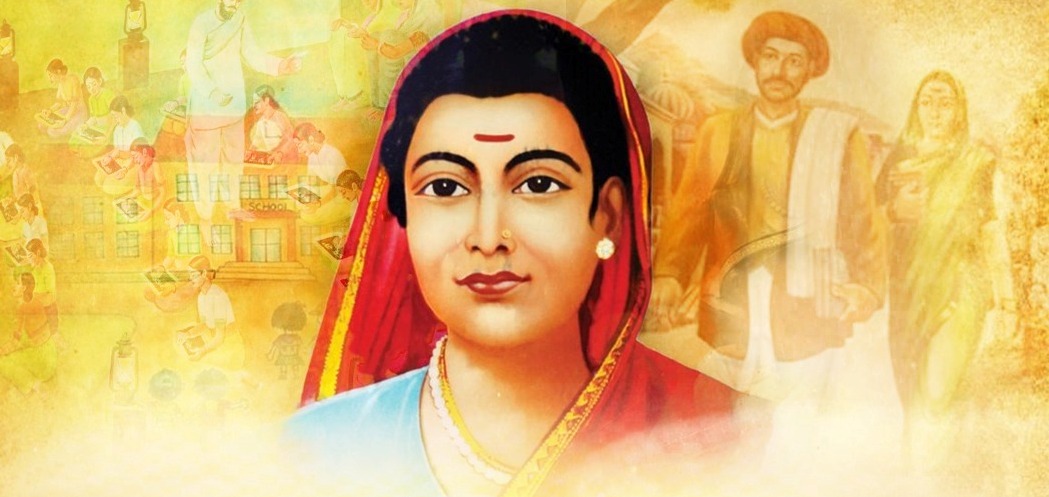
Savitribai Phule is remembered as one of the most courageous and visionary pioneers of women’s education in modern India. At a time when educating women was considered unthinkable, she stood firm against social opposition, personal humiliation, and even physical attacks. Her life is a saga of relentless struggle, unwavering determination, and deep commitment to social justice.
Early Life
Savitribai Phule was born on 3 January 1831 in Naigaon village of Satara district, Maharashtra. Her father, Khandoji Newse-Patil, was the village head, and her mother was Laxmibai. Growing up in a rural setting where women’s education was beyond imagination, Savitribai’s childhood reflected the harsh realities of gender inequality prevalent in 19th-century India.
Marriage and the Turning Point
In 1840, Savitribai was married at the tender age of nine to Mahatma Jyotiba Phule, who was thirteen at the time. Jyotiba Phule had already begun questioning caste discrimination, rigid rituals, and social exploitation. Recognizing the injustice around her, Savitribai chose not just to support her husband but to actively participate in his mission. Her unwavering companionship earned her the title “Krantijyoti”—the torchbearer of revolution.
Champion of Women’s Education
Savitribai realized that no meaningful social transformation was possible without empowering women. Women of that era suffered double discrimination—by gender and by caste. She believed education was the most powerful tool to break these chains.
In January 1848, Savitribai opened the first school for girls in Pune. The school operated at Bhide Wada, a location surrounded by orthodox opposition. Despite being abused, threatened, and even attacked while walking to school, she never abandoned her mission. Within just four years, Savitribai and Jyotiba Phule established 18 schools, an unprecedented achievement that slowly changed societal attitudes.
Beyond Education: Social Reformer
Savitribai’s work extended far beyond classrooms. She challenged deeply entrenched customs by:
Opening shelters for widows and abandoned women
Supporting widow remarriage
Opposing child marriage and the Sati system
Providing adoption facilities for children born to widows
During the devastating Maharashtra drought of 1876–77, she organized relief work for farmers and even provided shelter for destitute women, including those forced into prostitution by circumstances.
In 1893, she presided over the session of the Satyashodhak Parishad at Saswad near Pune, highlighting her leadership role in social reform movements.
Literary Contributions
Savitribai was also a powerful writer. Her poetry carried strong messages of equality, justice, and human dignity. Her notable works include:
- Kavyafule (1854)
- Savitribaichi Gani
- Subodh Ratnakar
- Bawankashi
Through her writings, she awakened social consciousness and inspired the oppressed to seek education and self-respect.
Devotion and Courage in Personal Life
When Jyotiba Phule suffered paralysis in 1887, Savitribai nursed him devotedly until his death in 1890. After his passing, she broke another social taboo by leading his funeral procession and performing the last rites herself—an act almost unheard of for a woman at that time.
The couple’s adopted son, Yashwantrao, faced social rejection due to prevailing prejudices. Savitribai stood firmly by him, continuing her lifelong struggle against discrimination even in her personal life.
Final Sacrifice
In 1897, Pune was struck by a deadly plague. Savitribai once again chose service over safety, tending to infected patients and organizing medical relief. While serving others, she contracted the disease herself and passed away on 10 March 1897.
Legacy
Savitribai Phule’s life is a shining example of courage, compassion, and conviction. She laid the foundation of women’s education in India and challenged centuries-old social injustices with fearless resolve. Her legacy continues to inspire generations to fight inequality and uphold the values of education, equality, and humanity.
Savitribai Phule did not merely educate women—she awakened a nation.